Women’s Mental Health Month: Uplifting Tips to Thrive Now
Every year, as May unfolds, so does an important conversation across the country. Women’s Mental Health Month provides a dedicated time to acknowledge, discuss, and address the unique mental health challenges women face. In a world where women often juggle multiple roles—professional demands, family responsibilities, societal expectations—mental wellbeing can sometimes take a backseat. Yet this month reminds us that women’s mental health deserves priority, not just in May, but year-round.
The statistics speak volumes: women are nearly twice as likely as men to be diagnosed with depression and anxiety disorders. They’re more vulnerable to certain trauma-related conditions, and often navigate mental health challenges that intersect with hormonal fluctuations, reproductive health, and gender-specific societal pressures. Despite these realities, women’s mental health concerns are frequently overlooked, minimized, or misdiagnosed in healthcare settings.
This month serves as both a celebration of progress and a call to action. It’s about creating space for women to share their experiences, connect with resources, and embrace self-care practices that support their mental wellbeing. It’s about recognizing that mental health is not a luxury but a necessity—one that forms the foundation for women to thrive in all areas of life.
Table of Contents
Understanding the Landscape: Mental Health Challenges in Women
Women’s mental health exists within a complex landscape shaped by biological, psychological, and sociocultural factors. Research consistently shows distinct patterns in how mental health conditions manifest in women compared to men.
Biological Factors
Women experience unique biological processes that can impact mental health throughout their lives:
- Hormonal fluctuations: From puberty through menopause, hormonal shifts can influence mood and mental wellbeing
- Reproductive health events: Pregnancy, childbirth, miscarriage, infertility, and menopause can trigger or exacerbate mental health conditions
- Premenstrual symptoms: Many women experience mood changes before menstruation, with some developing more severe premenstrual dysphoric disorder (PMDD)
According to the Office on Women’s Health, hormonal changes can make women more vulnerable to depression and anxiety, especially during significant reproductive transitions.
Societal and Cultural Pressures
Beyond biology, women navigate societal expectations that can take a toll on mental health:
- Caregiving responsibilities: Women often shoulder the primary burden of caring for children and aging parents
- Gender discrimination: Workplace inequality, wage gaps, and harassment create chronic stressors
- Sexual violence: Women experience higher rates of sexual assault and abuse, often leading to PTSD and other trauma-related conditions
The pressure to “do it all” excel professionally while maintaining primary responsibility for home and family creates what researchers call “role overload,” a significant risk factor for burnout, anxiety, and depression.
Common Mental Health Conditions in Women
While mental health conditions can affect anyone, certain disorders appear more frequently in women:
- Depression: Women experience depression at roughly twice the rate of men
- Anxiety disorders: From generalized anxiety to specific phobias, women are diagnosed more frequently
- PTSD: Though men experience more traumatic events overall, women are more likely to develop PTSD
- Eating disorders: Conditions like anorexia and bulimia affect women at significantly higher rates
- Perinatal mood disorders: Postpartum depression affects approximately 1 in 8 women
These conditions don’t exist in isolation. Many women experience comorbid conditions, with one mental health challenge often intertwining with others.
Breaking Barriers to Care
Despite the prevalence of mental health challenges among women, significant barriers to care persist:
- Stigma: Many women still face judgment for acknowledging mental health struggles
- Dismissal of symptoms: Women’s reports of mental health symptoms are more likely to be attributed to “hormones” or “stress” rather than legitimate conditions
- Time constraints: Caregiving responsibilities can make it difficult to prioritize therapy appointments
- Financial barriers: With women earning less on average than men, the cost of mental health care can be prohibitive
- Cultural factors: In many communities, discussing mental health remains taboo
Women’s Mental Health Month provides an opportunity to address these barriers head-on, advocating for accessible, affordable, and culturally competent care. It’s about creating systems that respond to women’s needs rather than requiring women to conform to existing systems.
Self-Care Tips for Women: Nurturing Mental Wellbeing
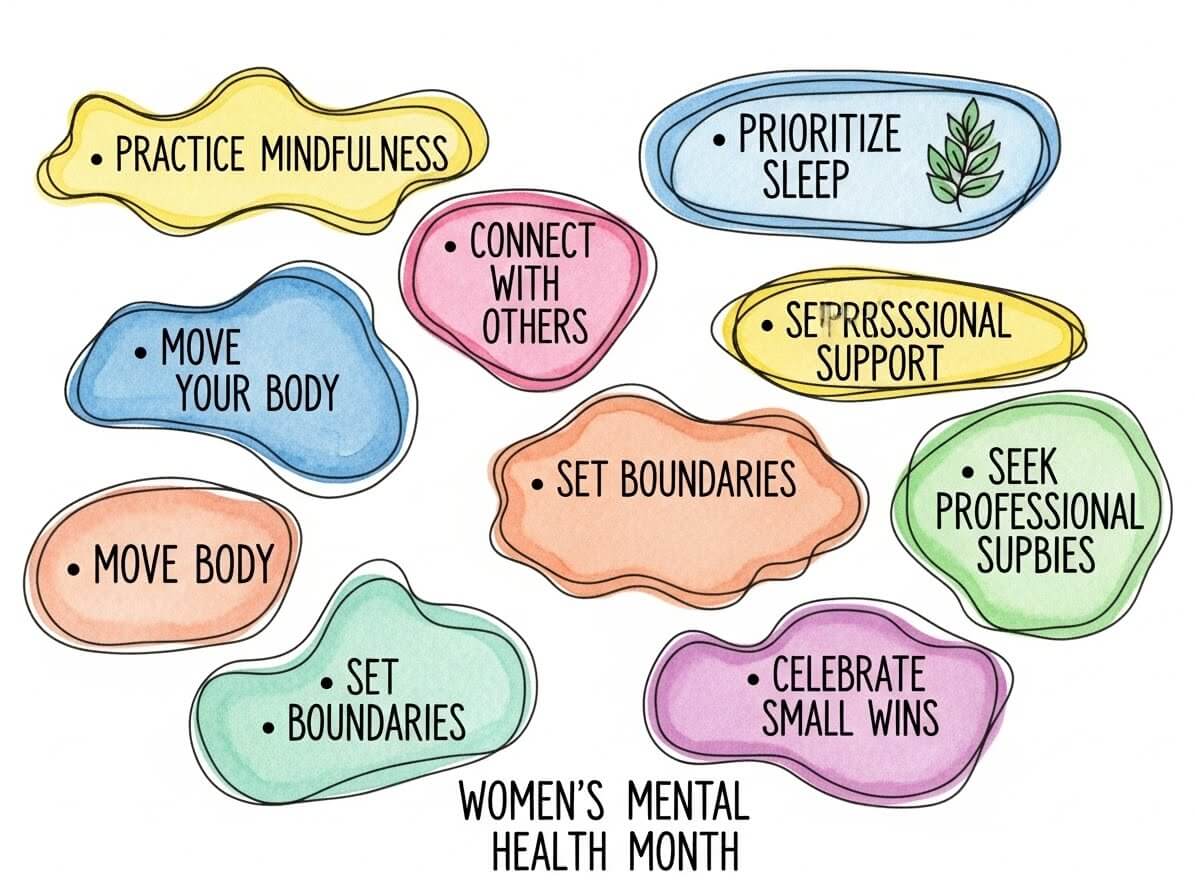
Self-care isn’t selfish—it’s essential. For women navigating mental health challenges, incorporating regular self-care practices can provide vital support. Here are evidence-based approaches that can make a difference:
Mind-Body Practices
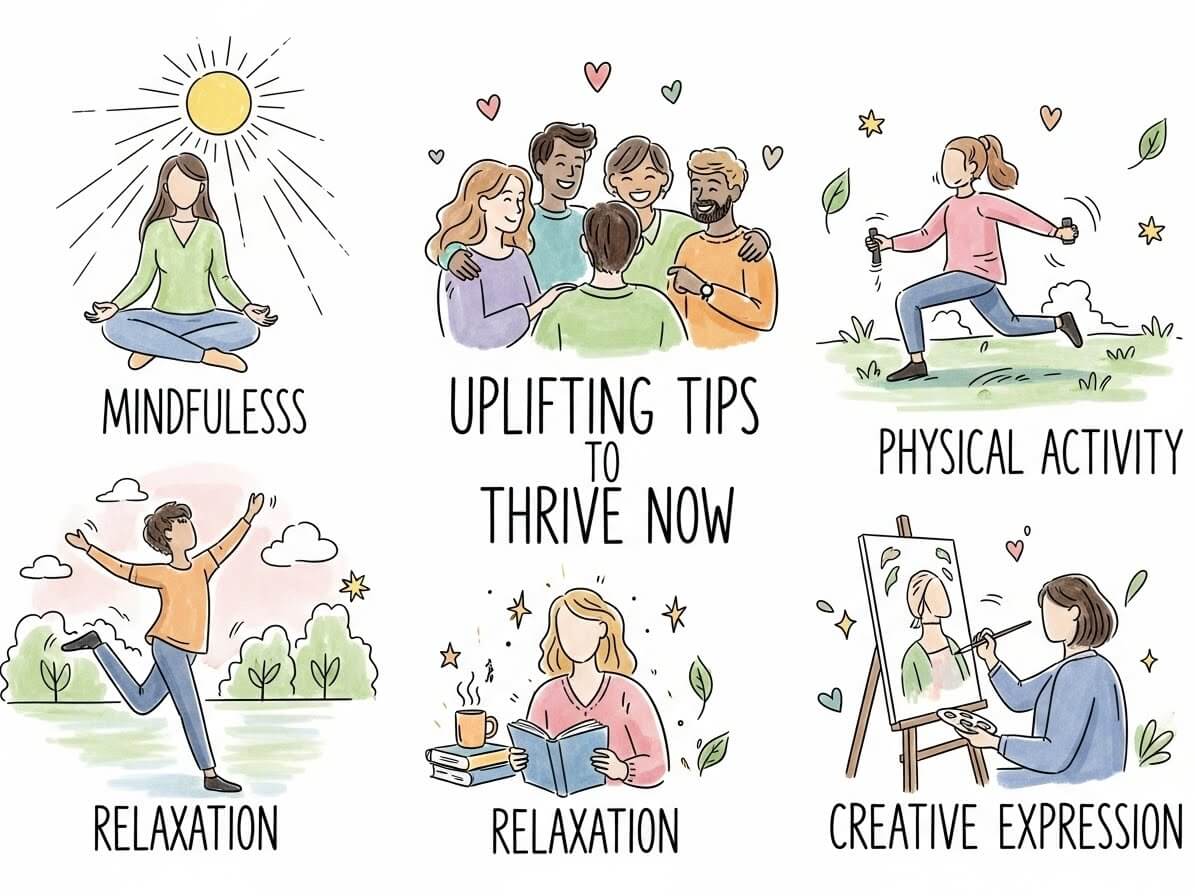
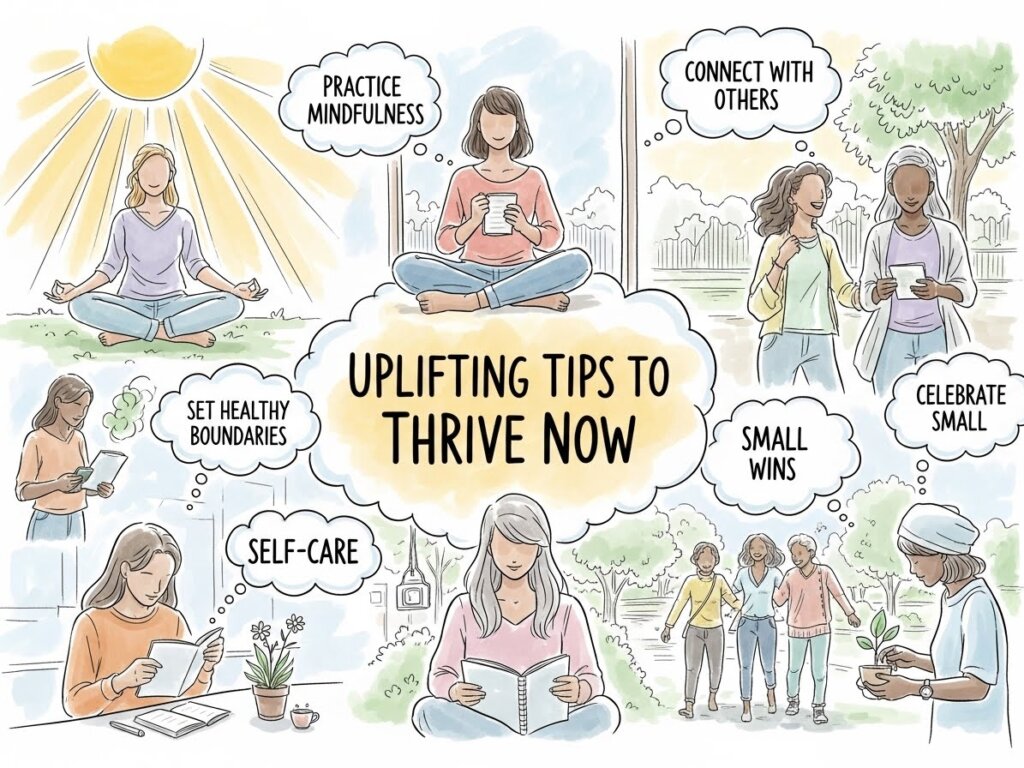
- Mindfulness meditation: Research shows just 10-15 minutes daily can reduce symptoms of anxiety and depressionYoga: Combines physical movement, breathing, and mindfulness to reduce stress and improve mood
- Progressive muscle relaxation: Systematically tensing and releasing muscle groups to reduce physical tension
These practices help ground women in the present moment, interrupting rumination and worry cycles that fuel anxiety and depression. A 2018 study found that mindfulness practices specifically tailored for women showed significant benefits for stress reduction.
Movement and Nourishment
- Regular physical activity: Even brief walks can boost mood-enhancing endorphins
- Nutrient-rich diet: Emerging research links gut health to mental health, emphasizing the importance of nourishing foods
- Adequate hydration: Dehydration can exacerbate anxiety and cognitive difficulties
- Quality sleep: Prioritizing sleep hygiene supports emotional regulation
These physical foundations create the conditions for emotional resilience. For women experiencing seasonal mood changes, regular outdoor movement can provide additional benefits through natural light exposure.
Connection and Community
- Authentic relationships: Cultivating connections where you can be fully yourself
- Support groups: Sharing experiences with others facing similar challenges
- Setting boundaries: Learning to say no to preserve energy for what matters most
- Asking for help: Challenging the notion that women must handle everything alone
Social connection serves as a powerful buffer against mental health challenges. Our group therapy programs provide spaces where women can find community while working through specific mental health concerns.
Creative Expression
- Journaling: Processing emotions through writing
- Art therapy: Using visual expression to access emotions that may be difficult to verbalize
- Music: Both listening and creating music can regulate mood
Creative practices offer women alternative languages for expressing complex emotional experiences. They can be particularly helpful for processing trauma or navigating transitions.
Professional Support
- Therapy: Individual, group, or specialized approaches like CBT or EMDR
- Medication: When appropriate, prescribed and monitored by healthcare providers
- Regular check-ins: Preventive mental health care, not just crisis intervention
While self-care is valuable, it’s important to recognize when professional support is needed. For many women, combining self-care practices with therapeutic approaches provides the most comprehensive support.
Advocating for Women’s Mental Health Year-Round
While Women’s Mental Health Month provides focused attention in May, the work of supporting women’s mental wellbeing continues throughout the year. Here are ways we can collectively advance this important cause:
- Destigmatize conversations: Create spaces where women can speak openly about mental health without judgment
- Advocate for research: Support studies that address gaps in understanding women’s mental health
- Amplify diverse voices: Center the experiences of women from marginalized communities whose mental health challenges may be compounded by discrimination
Progress happens when we recognize that women’s mental health isn’t just a women’s issue—it’s a societal issue that affects families, workplaces, and communities.
Embracing Hope and Resilience
As we honor Women’s Mental Health Month, we celebrate not only awareness but also the remarkable resilience women demonstrate in the face of challenges. We acknowledge the strength it takes to navigate mental health difficulties while fulfilling multiple roles and responsibilities.
For women currently struggling with mental health challenges: you are not alone, and reaching out for support is an act of courage, not weakness. Your wellbeing matters—not because of what you accomplish or provide for others, but because you inherently deserve care and compassion.
This month, let’s commit to creating a world where women’s mental health needs are recognized, respected, and addressed. Where self-care isn’t a luxury but a fundamental practice. Where asking for help is normalized. And where every woman has access to the resources she needs to thrive mentally and emotionally.
Because when we support women’s mental health, we don’t just improve individual lives—we strengthen families, workplaces, and entire communities. That’s something worth celebrating and advocating for, this month and every month.