
How Long to Gain Muscle Naturally: The Realistic Timeline!
How Long to Gain Muscle: A Comprehensive Guide to Realistic Timelines and Expectations
How long to gain muscle is one of the most searched questions among fitness enthusiasts starting their strength training journey. Many beginners wonder how long to gain muscle visibly after committing to the gym, often expecting rapid transformations influenced by social media or ads. The reality is that understanding how long to gain muscle naturally requires patience, as muscle growth—known as hypertrophy—is a gradual process influenced by multiple factors.
This in-depth guide explores the realistic timeline for how long to gain muscle, backed by scientific research, expert insights, and practical advice. We’ll break down month-by-month expectations, key influencing factors, common pitfalls, and strategies to optimize your progress.
Table of Contents
Understanding Muscle Growth: The Science Behind Hypertrophy
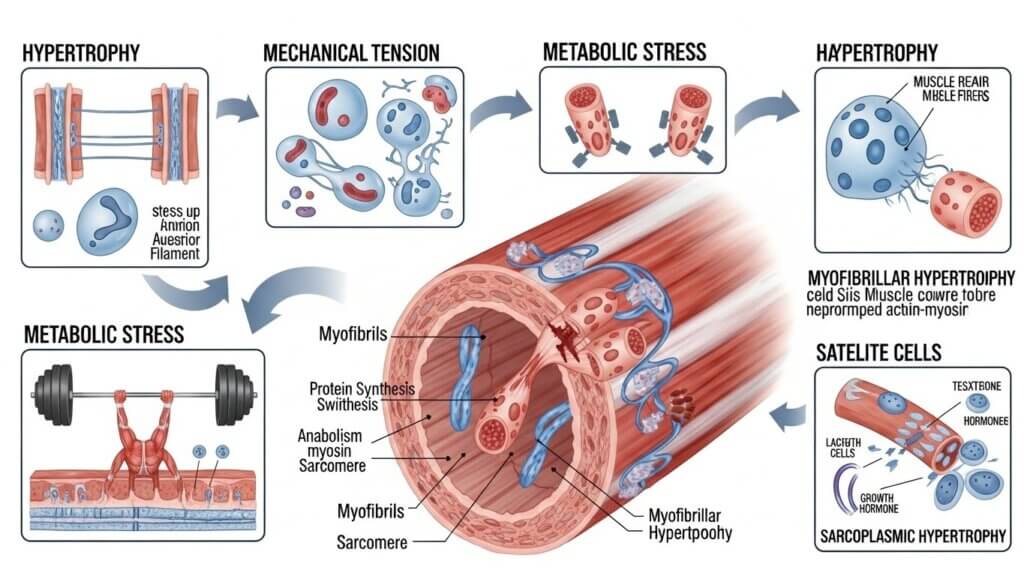
Before diving into timelines, it’s essential to grasp how muscles grow. Muscle hypertrophy occurs when muscle fibers sustain micro-damage from resistance training, then repair and enlarge during recovery. This process involves satellite cells fusing to fibers, increasing protein synthesis.
Research shows muscle protein synthesis elevates significantly post-workout: up to 50% at 4 hours and 109% at 24 hours after heavy resistance exercise (PubMed study). However, visible changes lag behind these cellular events.
Three primary mechanisms drive hypertrophy:
Mechanical tension: Force from lifting heavy weights.
Muscle damage: Micro-tears triggering repair.
Metabolic stress: Buildup of metabolites like lactate creating a “pump.”
Studies (e.g., Journal of Strength and Conditioning Research) emphasize progressive overload—gradually increasing weight, reps, or volume—as crucial for sustained growth.
How Long to Gain Muscle: Detailed Month-by-Month Timeline
The timeline for how long to gain muscle varies, but averages provide a roadmap. Beginners experience “newbie gains” fastest due to neural adaptations and untrained muscles responding robustly.
Weeks 1-4: Building Foundations Through Neural Adaptations
In the initial phase of asking how long to gain muscle, most changes are neurological, not hypertrophic. Your nervous system learns efficient muscle fiber recruitment.
What to expect:
- Rapid strength increases (e.g., lifting heavier without size gains).
- Improved form and coordination.
- Reduced soreness as the body adapts.
- Possible temporary weight gain from glycogen storage and water retention.
Cleveland Clinic experts note strength improvements in 3-4 weeks, but no visible muscle yet. A Journal of Strength and Conditioning Research study attributes early gains primarily to neural pathways.
Beginners might gain 0.5-1 pound of actual muscle here, but visuals remain subtle.
Weeks 5-12 (Months 2-3): Emergence of True Hypertrophy
This marks when many first notice answers to how long to gain muscle visibly.
What to expect:
- Subtle toning and firmness.
- Clothes fitting tighter in targeted areas.
- Continued strength progression.
- Occasional compliments from others.
True muscle fiber growth begins as micro-damage repairs larger. Studies (e.g., PubMed on thigh muscle thickness) show measurable increases after 2-4 weeks in some groups.
Beginners can gain 1-2 pounds of muscle per month here under optimal conditions (e.g., calorie surplus, high protein).
Months 4-6: Pronounced Visual Changes
By now, consistent trainees see clearer results in how long to gain muscle.
What to expect:
- Evident muscle definition, especially if body fat is moderate.
- Significant changes in physique photos.
- Strength gains slowing but steady.
Hypertrophy dominates, with neural adaptations complete. Research from the National Strength and Conditioning Association suggests 0.5-2 pounds monthly in the first year.
Months 6-12: Transition to Intermediate Level
Progress continues, but the rate for how long to gain muscle decelerates.
What to expect:
- Steady size and definition increases.
- Need for advanced techniques like periodization.
- Potential minor plateaus requiring adjustments.
Total first-year gains: Men often 10-25 pounds; women about half, per expert models (e.g., Lyle McDonald).
Beyond Year 1: Long-Term Sustainable Growth
After the newbie phase, how long to gain muscle becomes slower—often halving yearly.
What to expect:
- Incremental changes accumulating over time.
- Advanced programming essential.
- Rates drop to 0.25-1 pound monthly.
Natural limits approach after 3-5 years, though improvements persist with dedication.
Key Factors Influencing How Long to Gain Muscle
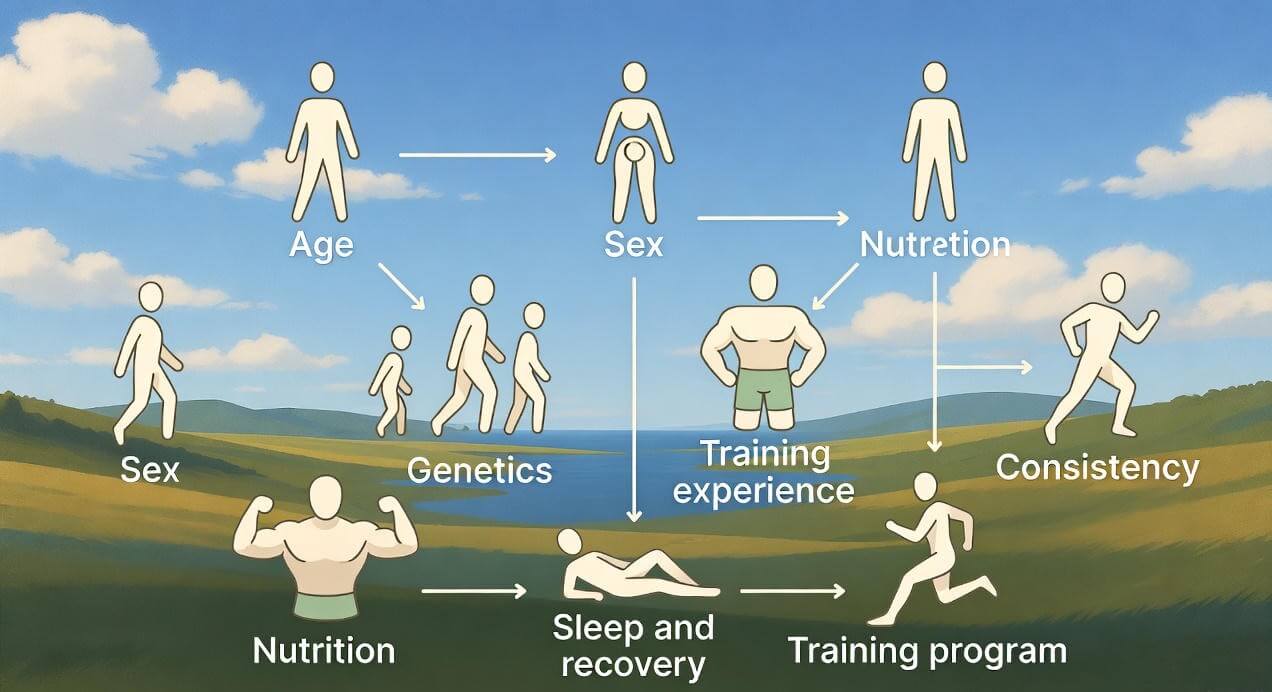
No universal timeline exists for how long to gain muscle due to individual variables.
- Genetics: Muscle fiber distribution (fast- vs. slow-twitch), hormone sensitivity, and frame determine potential. Twin studies estimate 45-53% heritability in lean mass.
- Age: Peak in teens-20s from high testosterone/growth hormone. Post-35, rates slow due to declining hormones, but resistance training remains effective (NCBI reviews show gains in older adults).
- Sex: Men typically gain faster/absolutely more due to higher testosterone; women achieve similar relative gains.
- Training Experience: Beginners: 1-2+ pounds/month. Intermediates: 0.5-1. Advanced: 0.25-0.5.
- Nutrition: Caloric surplus (250-500 calories), protein (1.6-2.2g/kg bodyweight), carbs/fats for energy. Undereating halts progress.
- Sleep and Recovery: 7-9 hours nightly for growth hormone release. Chronic stress elevates cortisol, impeding gains.
- Training Program: Volume (sets/reps), intensity (60-85% 1RM), compound exercises, progressive overload.
- Consistency: Sporadic effort yields sporadic results.
Realistic Expectations and Muscle Gain Rates
Scientific benchmarks:
- Beginners: 1-2 pounds/month (up to 24 pounds/year optimally).
- Year 2+: Halves progressively.
- Women: ~50-70% of men’s absolute gains.
Track progress objectively: Monthly photos, measurements, strength logs, or DEXA scans.
Common Mistakes That Delay Answers to How Long to Gain Muscle
Avoid these pitfalls:
- Unrealistic expectations (e.g., expecting pro physiques quickly).
- Inconsistent training or frequent program switching.
- Poor form increasing injury risk.
- Neglecting recovery or overtraining.
- Inadequate nutrition (low protein/calories).
- Ignoring progressive overload.
- Comparing to enhanced athletes or filtered social media.
- Skipping compound lifts or leg days.
Strategies to Optimize Your Muscle-Building Journey
To shorten how long to gain muscle within natural limits:
- Train 3-5x/week with full-body or split routines.
- Prioritize compounds (squats, deadlifts, bench presses).
- Aim for 10-20 weekly sets per muscle group.
- Eat in surplus with high protein.
- Prioritize sleep and stress management.
- Periodize training to avoid plateaus.
- Supplement wisely (e.g., creatine for performance).
The Bottom Line on How Long to Gain Muscle Naturally
How long to gain muscle? Strength in weeks, subtle visuals in 2-3 months, significant changes in 6-12 months, and peak potential over years. Muscle building is a marathon demanding consistency, proper nutrition, recovery, and realistic mindset.
Everyone’s timeline differs—focus on personal progress, celebrate milestones, and trust the process. With dedication, you’ll achieve meaningful muscle growth, enhancing strength, health, and confidence.