

Cardio or Weights First? Avoid This Common Mistake!
You’ve just walked into the gym, motivated and ready for a great workout. But then it hits you—should you head to the treadmill or straight to the weight rack? The age-old debate of cardio or weights first continues to puzzle fitness enthusiasts of all levels.
The truth is, workout order matters more than you might think. Your sequence can significantly impact your energy levels, performance, and ultimately, your results. Whether your goal is building muscle, losing fat, or improving overall fitness, understanding the science behind workout sequencing can help optimize your time at the gym.
In this guide, we’ll explore the benefits of both approaches, what research actually tells us, and how to create the best workout order for your specific goals.
Table of Contents

The Case for Cardio First
Many people instinctively start their workout with cardio, and there are some solid reasons for this approach:
Effective Warm-Up Benefits
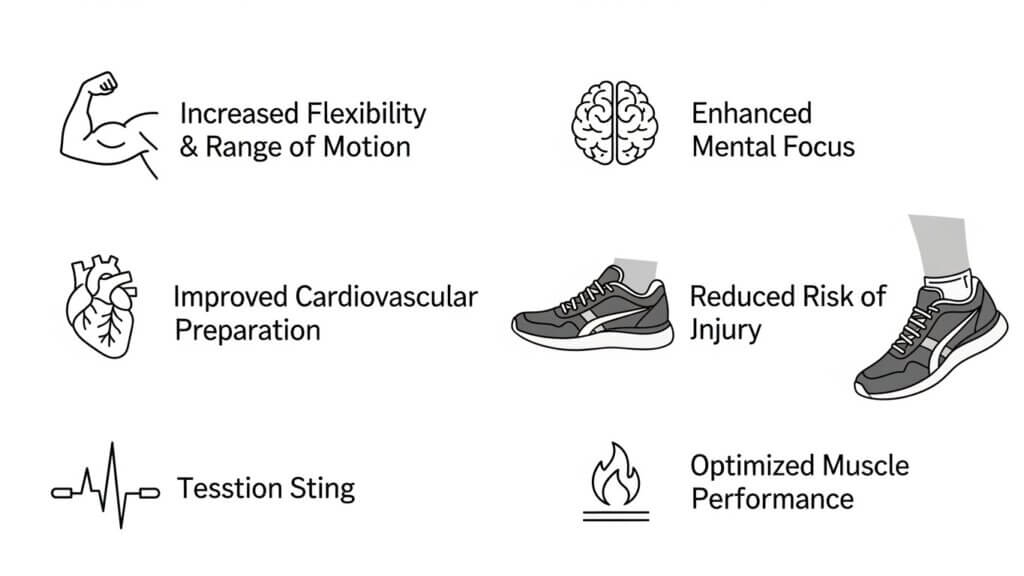
Beginning with 5-10 minutes of light to moderate cardio increases your core temperature, sends oxygen-rich blood to youBeginning with 5-10 minutes of light to moderate cardio increases your core temperature, sends oxygen-rich blood to your muscles, and prepares your body for more intense work. This warm-up effect can:
- Reduce injury risk by improving joint mobility
- Enhance muscle performance through increased blood flow
- Mentally prepare you for your workout
Dr. John Porcari, professor of exercise and sport science at the University of Wisconsin, explains: “A proper warm-up dilates your blood vessels, ensuring your muscles are well supplied with oxygen. It also raises your muscles’ temperature for optimal flexibility and efficiency
Fat-Burning Potential
Some research suggests that performing cardio on an empty stomach or before weights might enhance fat oxidation. A 2017 study published in the Journal of Exercise Nutrition & Biochemistry found that participants who performed aerobic exercise before breakfast burned more fat throughout the day compared to those who exercised after eating.
However, the fat-burning advantage may be modest and depends on multiple factors including intensity, duration, and your individual metabolism.
Cardio-First Drawbacks
BBefore you commit to always starting with cardio, consider these potential downsides:
- Decreased strength and power for subsequent weight training
- Reduced muscle-building potential
- Lower performance during technical lifting movements
Cardio, especially high-intensity or long-duration cardio, depletes glycogen stores and induces fatigue that can compromise your strength training perfor
The Argument for Weights First
Many strength coaches and exercise physiologists recommend starting with resistance training for several compelling reasons:
Maximized Strength Performance
Lifting weights requires significant neural activation, coordination, and fresh energy stores. When you’re not pre-fatigued from cardio, you can:
- Lift heavier weightsPerform more reps at a given weight
- Execute exercises with better technique
Research consistently shows that strength performance decreases when cardio precedes weight training. A study in the Journal of Strength and Conditioning Research found that performing even moderate-intensity cardio before resistance training significantly reduced participants’ total repetitions and training volume.
Enhanced Muscle Growth Potential
For those focused on building muscle, starting with weights makes physiological sense. Your muscles need to be fresh and fully fueled to create the micro-damage necessary for growth. When you’ve already depleted energy stores through cardio, your capacity for this muscle-building stimulus decreases.
Brad Schoenfeld, Ph.D, a leading researcher on muscle hypertrophy, notes: “If muscle development is a primary goal, it makes logical sense to perform resistance training when you’re fresh and able to generate maximal force production.”
Elevated Post-Exercise Metabolism
Resistance training creates a powerful afterburn effect known as excess post-exercise oxygen consumption (EPOC). When weights come first, you maintain the intensity needed to maximize this metabolic boost.
According to research from the American Council on Exercise, an intense weight training session can elevate your metabolism for up to 38 hours after your workout ends potentially burning hundreds of additional calories.
Best Workout Order for Fat Loss: What Science Reveals
If fat loss is your primary goal, the ideal workout sequence deserves special attention. While both cardio and strength training contribute to fat loss, how you order them can impact your results.
The Research on Fat Loss Workout Routines
Several studies have examined the fat loss effects of different exercise orders:
A 2013 study published in the Journal of Strength and Conditioning Research found that participants who performed strength training before cardio lost more body fat over 12 weeks than those who did cardio first.
The researchers concluded that the weights-first approach likely preserved training intensity while still allowing for sufficient calorie expenditure during the cardio portion.
Another study from the University of Tokyo demonstrated that fat oxidation rates were higher when participants performed their cardio after resistance training compared to cardio alone.
Metabolic Resistance Training: A Hybrid Approach
For maximizing fat loss, many experts now recommend metabolic resistance training—a system that combines weights and cardio into circuit-style workouts. This approach:
- Maintains muscle while burning fat
- Creates substantial calorie expenditure during and after exercise
- Saves time by combining both training modalities
Celebrity trainer Jillian Michaels explains: “Combining resistance moves in circuit fashion with minimal rest between exercises gives you the muscle-building benefits of weights with the calorie burn of cardio.”
Practical Recommendations Based on Your Goals
Rather than a one-size-fits-all approach, consider these evidence-based recommendations for your specific fitness objectives:
For Muscle Building/Strength
Recommended order: Weights first, followed by optional short cardio
- Focus on compound lifts while fresh
- Perform 5-10 minutes of light cardio as a warm-up only
- If including cardio, keep sessions short (15-20 minutes) and moderate intensity
- Consider separating cardio and weights into different training days
For Fat Loss
Recommended order: Brief cardio warm-up, weights, then more intense cardio
- Start with 5-10 minutes of light cardio to warm up
- Perform strength training with moderate to heavy weights
- Finish with 20-30 minutes of steady-state or interval cardio
- Consider metabolic circuit training that combines both modalities
For Cardiovascular Health/Endurance
Recommended order: Cardio first, weights second
- Perform your cardio training when fresh
- Follow with full-body resistance training using moderate weights
- Consider splitting your cardio across the day (morning and evening)
For Overall Fitness
Recommended order: Alternate your approach
- Vary your workout order to prevent adaptation
- Focus on weights first on some days and cardio first on othersConsider
- concurrent training principles to minimize interference effects
Special Considerations for Workout Sequencing
Beyond your primary fitness goals, several other factors should influence your workout order:
Time Constraints
If you’re short on time, prioritize the type of exercise most aligned with your main goal. For most people seeking general fitness improvements, strength training typically delivers more bang for your buck in limited workout windows.
Energy Levels and Chronotype
Morning people might find they perform better with challenging weights sessions early in the day, while night owls might excel at evening strength training. Listen to your body’s natural rhythms.
Recovery Capacity
Your age, sleep quality, nutrition, and stress levels all affect how you respond to different workout sequences. If you’re under-recovered, beginning with intense cardio before weights can further compromise performance.
Finding Your Perfect Workout Order
While research provides useful guidelines, finding your ideal workout sequence requires some personal experimentation. Here’s how to determine what works best for you:
The Two-Week Test
Try each approach for two weeks, tracking your:
- Performance metrics (weights lifted, reps completed, cardio pace/distance)Energy levels throughout each workout
- Subjective enjoyment of each session
- Recovery between workouts
Listen to Your Body
Your individual response matters more than general recommendations. Some people naturally perform better with one sequence over another, regardless of what research suggests.
The Bottom Line on Cardio or Weights First
The science-backed answer to whether you should do cardio or weights first depends largely on your primary fitness goal:
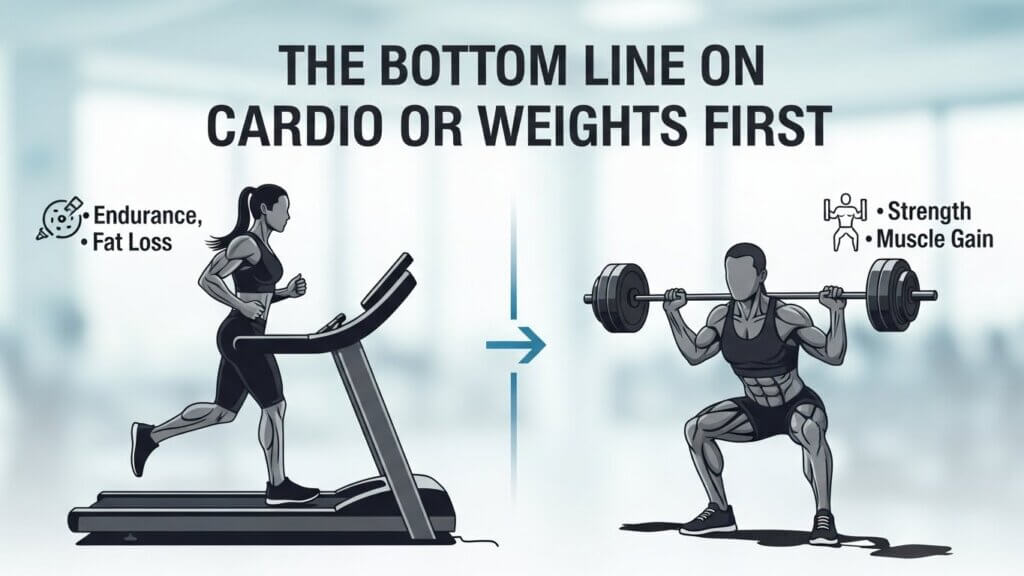
- For strength and muscle gains: Weights first
- For fat loss: A brief cardio warm-up, then weights, followed by more intense cardio
- For cardiovascular fitness: Cardio first
- For general fitness: Either approach works, with variety being beneficial
Remember that consistency matters more than perfect workout sequencing. The best exercise order is ultimately the one you’ll stick with over time.
What’s your experience with workout sequencing? Have you noticed better results with a particular order? Share your thoughts and questions in the comments below!